Combarro one of the most attractive towns in Europe
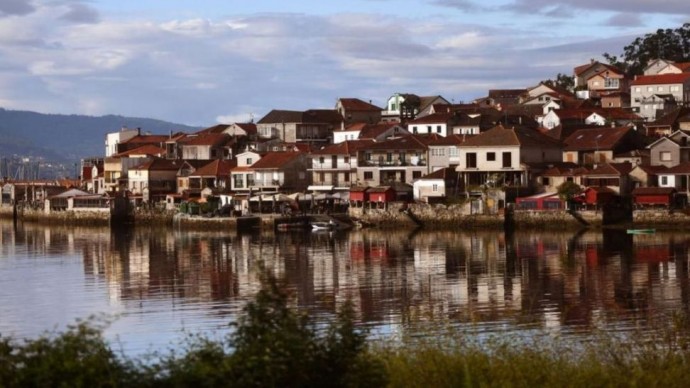
Users of the Jetcost portal, tourists and travelers who have visited different places in Europe in recent months, have rated Combarro as one of the most attractive coastal towns on the Continent, taking into account issues such as the beauty of its landscape, the gastronomic offer and, overall, his charm and personality.
Considered by many to be the most beautiful town in Galicia, Combarro is located in the magical setting of the Rías Baixas, not far from the city of Pontevedra. It is especially known for its granaries, small structures with solid pillars and generally topped by a small stone cross that are located outside the main house and that in the 18th and 19th centuries served to store food away from vermin and soil moisture, as well as as well as for its traditional and colorful coastal fishing houses that have well-preserved stone or wooden balconies, with excellent views of the ocean. There are also several cruzeiros, a traditional construction with a stylized cross, seen not only in Galicia, but also in other Celtic regions, such as Ireland or Brittany. In all of them, the figure of the Virgin looks towards the sea, while the Christ looks towards land.
Combarro leads the ranking of beautiful towns among Jetcost users
They have valued the candidates based on their beauty, the friendliness of their people, their gastronomic offer and, overall, their charm and personality.
Combarro is now the most beautiful town on the peninsula, officially, for users of one of the most powerful vacation search engines on the Internet: Jetcost. This week the company announced the result of the vote proposed to its clients to choose the most beautiful town in Europe. In this way, users of the flight and hotel search engine jetcost.es, on this occasion, have valued the latter based on their beauty, the friendliness of their people, their gastronomic offer and, overall, their charm and personality and Combarro in Galicia it has been one of them, standing out for its architecture, in which granaries predominate, generally topped by a small stone cross, as well as for its traditional coastal fishing houses that have well-preserved stone or wooden balconies, with excellent views. to the ocean and the configuration of its narrow streets in which the traditional trades of fishing and agriculture coexisted.
In this way, the historical artistic complex becomes part of a list of notable places, in which it shares prominence with Cadaqués, Tarifa, Sóller, Moraira.
Combarro has had the honor of being a candidate for the most beautiful town in a chocolate brand contest in 2017, as well as in the Network of Seafaring Villages of Spain.
Combarro is one of the fishing villages in Galicia that has best retained most of its traditional architecture. Built entirely of granite, its urban structure and its buildings have survived almost intact until the present day.
Declared an Artistic and Picturesque Site in 1972, Combarro was bequeathed to the San Xoán de Poio Monastery in the 12th century by queen Urraca, and its history remained closely connected to the monastery until the mid-19th century.
The most iconic feature of Combarro are its hórreos (granaries). These are grain stores that stand on pillars (“pés”) to protect them from the damp and rodents. In this area, they are built of stone and wood, and are known locally as “palleiras”. Around 60 of them survive, of which half are lined up along the shoreline, offering the characteristic picture of the village.
It is, however, the fishermen’s houses that lend the village its distinctive identity. Most are small, terraced dwellings facing the sea. The ground floor was originally used to store the fishing gear, farm tools and occasionally to house a small wine press. Many also have a narrow porch. The first floor has a characteristic balcony which looks out to sea. The balustrades were originally made of wood, iron or stone and were often painted with the colours left over from painting the boats, giving the village its distinctive multicoloured appearance.
Another of the village’s distinctive features are the seven granite crosses, erected between the 18th and 20th centuries. Usually situated at crossroads, they have a variety of purposes. They may serve to provide protection, or they may have been donated by individuals in fulfilment of a promise. Several of the crosses in Combarro have a considerable aesthetic quality, such as the Praza da Fonte cross of 1771, depicting a crucifix and St Anne, and the cross in Plaza de San Roque, dating back to 1802. Some also have a stone table (“pousadoiro”) that served as an altar and on which coffins were traditionally placed at funerals. Each year, they are decorated for the traditional Corpus Christi procession.
El pueblo de las brujas
Combarro is a parish of the municipality of Poio in the Galician province of Pontevedra.
It is a seaside town located close to both the provincial capital of Pontevedra (7 km) and other famous towns such as Sangenjo.
Most notable is its old quarter, where, in addition to the parish church, there are numerous Oreos (stone vaults) and Crosses.
It is declared an object of cultural interest as a Historical Complex and as a Historical Site.
Considered one of the most beautiful and picturesque villages in all of Galicia, its alleys and stone granaries of Oreos exude magic.
Combarro seems to be an enchanted place, it is considered a witches' village. Popular legends of Galicia of the past tell us about witches who entered into an alliance with the devil to do evil. Each of its corners conveys even more mystery, so to speak, a magic that immerses and enchants the traveler, prompting him to remember each of the steps he took there.
